Hello, sake lovers and hospitality professionals.
Today, we focus on Niigata Prefecture and the sake that has defined its reputation both domestically and internationally.
Through this article, we invite you to deepen your understanding of how this region’s geography, and climate shape a distinctive sake style
Niigata and sake
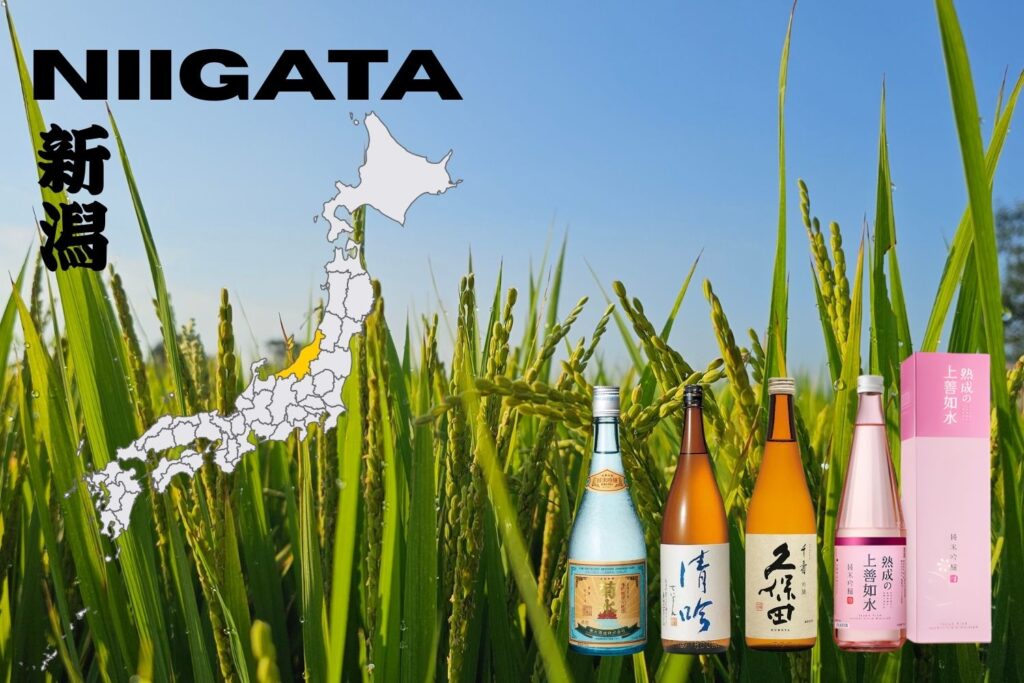
Niigata Prefecture is located on the western side of Japan’s main island, Honshu. This geographic positioning plays a critical role in producing two indispensable elements of sake: high-quality rice and pristine water.
The region is home to the vast Echigo Plain, nourished by rivers that carry mineral-rich sedimentsacross wide agricultural land. This allows for stable, large-scale rice cultivation.Niigata experiences pronounced seasonal contrasts, with hot summers and severe winters. This wide temperature variation allows rice to develop concentrated sweetness and umami while maintaining structural integrity – one of the key reasons Niigata is Japan’s No.1 rice-producing prefecture.
Niigata is not only one of Japan’s top rice-producing regions; it is also a leading producer of Gohyakumangoku, a premium sake rice variety with one of the highest market shares in Japan. Due to its relatively low protein content, Gohyakumangoku contributes to the clean, crisp, and dry style known as tanrei karakuchi—Niigata’s signature expression.
Niigata also faces the Sea of Japan, a cold body of water that shapes its severe winter climate. Moist seasonal winds from Siberia collect water vapor as they cross the sea and release it as heavy snowfall when they collide with mountain ranges. As the snow slowly melts, it filters through the land and becomes soft water with low mineral content. This soft water encourages slower fermentation, resulting in sake with a smooth texture, elegant aromatics, and refined balance.While Niigata’s soil is enriched with minerals that support premium rice cultivation, its brewing water is notably soft and low in mineral content—an ideal contrast that defines the region’s sake style.
Niigata Sake Available in BC
Now that we have explored the region, it is time to consider what is accessible in British Columbia.
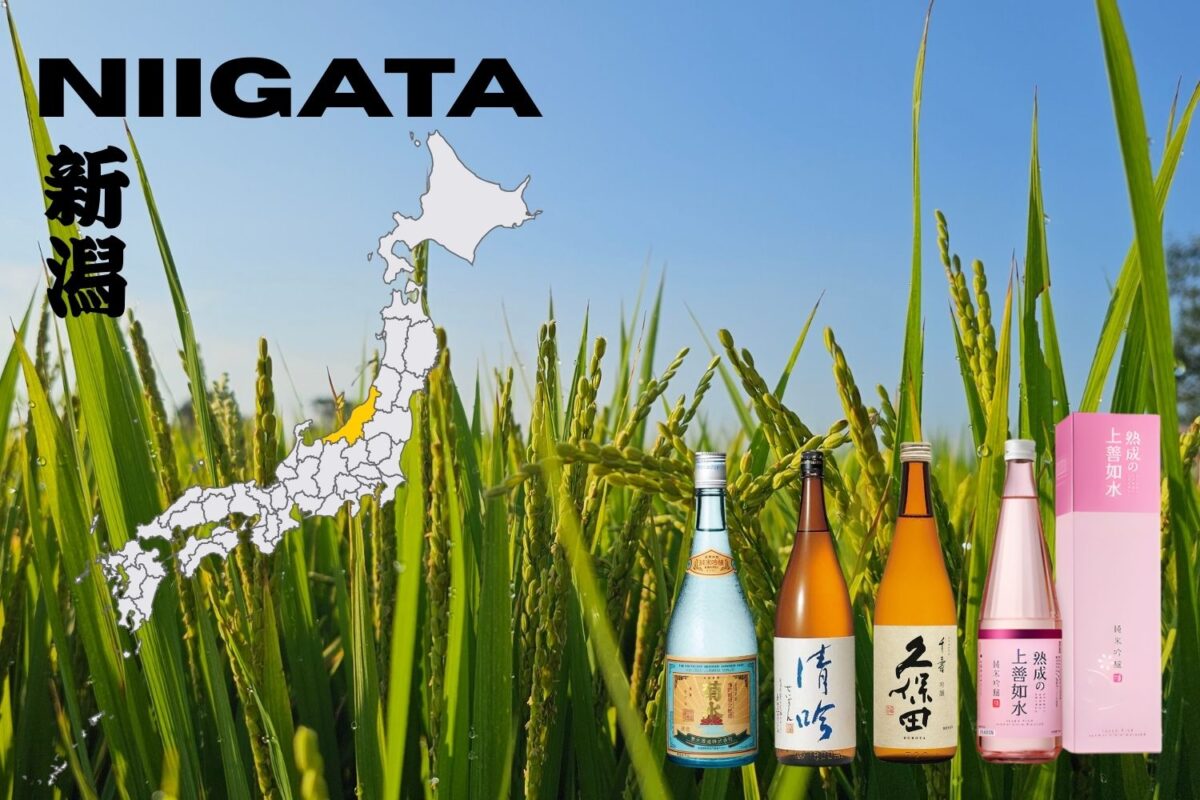
Kubota by Asahi Shuzo
A brand that popularized the tanrei karakuchi style nationwide. Many of its expressions are highly polished food-friendly sake, ideal for pairing with a wide range of Japanese cuisine.
Jozen Mizunogotoshi by Shirataki Shuzo
As the name suggests—“like water”—this sake is soft, light, and approachable. Its gentle fruit-forward profile makes it particularly attractive to newcomers.
Kikusui by Kikusui Shuzo
Compared to typical Niigata styles, Kikusui offers more richness and depth. It is also known for nama genshu (unpasteurized, undiluted sake), which delivers vibrant freshness and higher alcohol content due to the absence of water adjustment after pressing.
Koshinohomare by Hara Shuzo
An elegant, dry sake with sharp finish and classic structure. The brewery continues to uphold traditional toji craftsmanship, representing a refined, orthodox Niigata style
Final Thoughts
We have explored Niigata’s regional identity, its influence on sake production, and the brands available in BC.
Why not invite your customers and friends to taste Niigata while reflecting on the land and climate that define it?